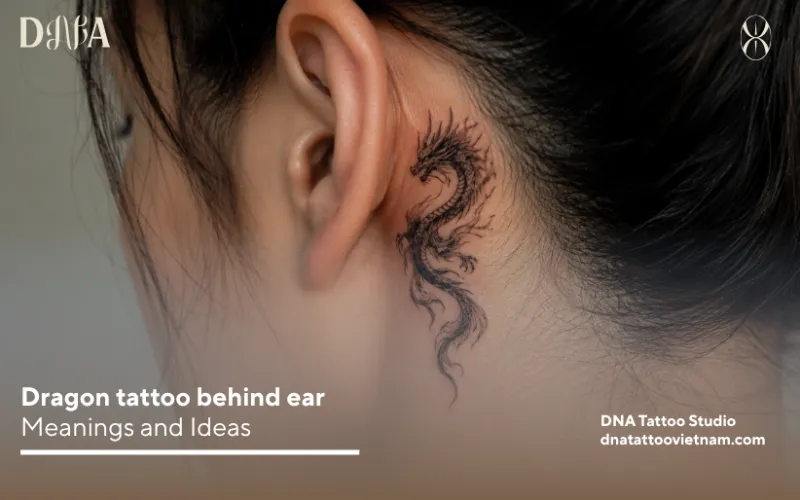
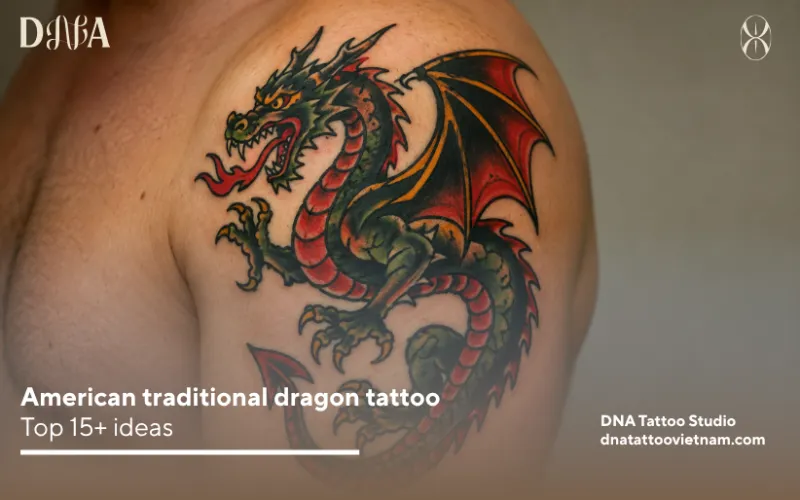
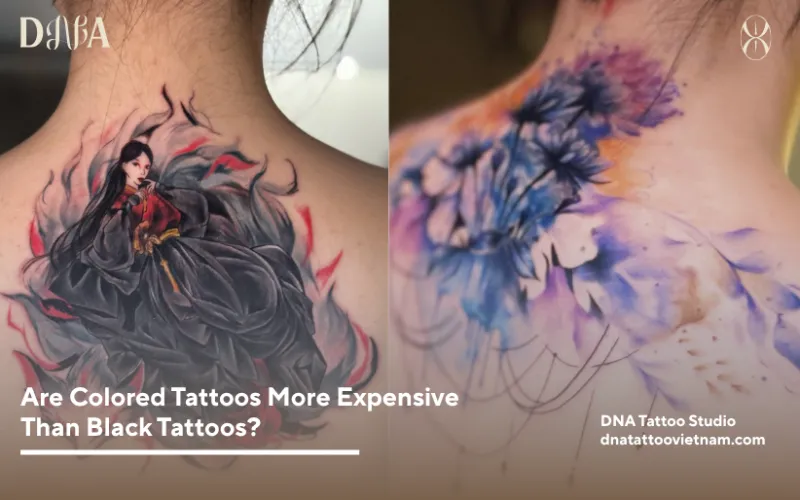
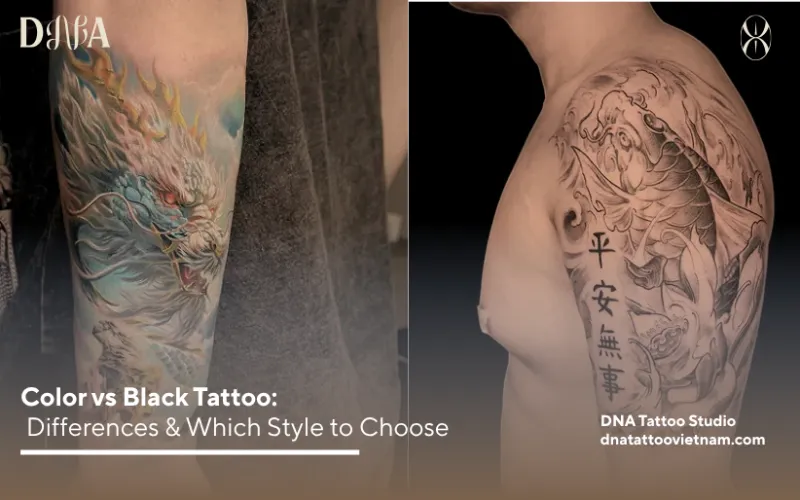
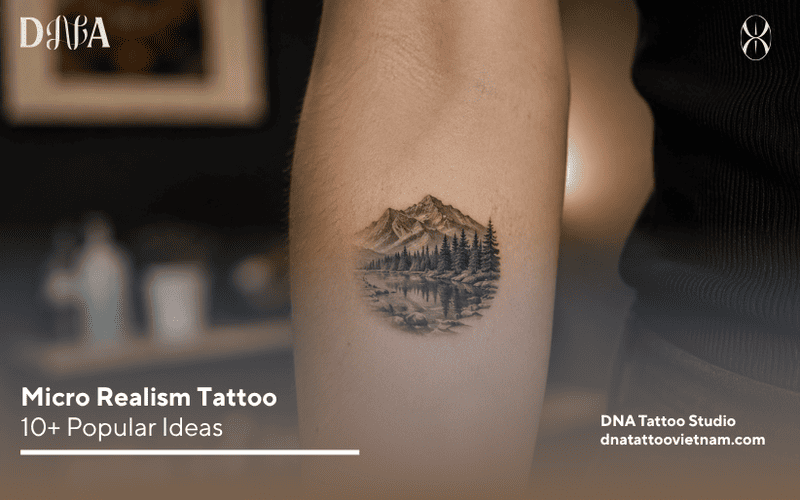
Blackwork tattoo is known for bold black ink, strong contrast, and styles ranging from geometric patterns to traditional motifs. DNA Tattoo Studio can help you explore the style, choose the right design, and find a trusted tattoo studio for your next piece.
1. What is a blackwork tattoo?
A blackwork tattoo is an expressive style of body art defined by its exclusive use of solid black ink. By relying entirely on the striking contrast between black ink and bare skin, it delivers a bold, graphic aesthetic that demands a total commitment to a monochromatic palette.
What makes blackwork particularly distinctive is its relationship with negative space, a principle that also strongly influences modern tattoo studio design aesthetics. Rather than filling every inch of skin, many blackwork designs use the natural skin tone as a compositional element. Untattooed areas carry as much visual weight as the inked sections, and managing that balance is what separates a skilled blackwork artist from an ordinary one.

2. History of blackwork tattoos
Even though blackwork tattoos are often perceived as a modern stylistic trend, their origins trace back thousands of years to the earliest known tattooing practices. Black ink was the first pigment ever used to permanently mark human skin, and tattooing itself has existed for at least 5,000 years across diverse civilizations. Early cultures applied these markings for ritualistic, medicinal, and social purposes, with solid black ink forming the foundation of traditions in regions such as Polynesia, Southeast Asia, Africa, and the Americas. The defining use of negative space in contemporary blackwork is not a new concept, but rather a rediscovery of ancient techniques refined through generations.
Over time, blackwork evolved from functional and ceremonial roles into a recognized form of fine art. Its resurgence in the 20th and 21st centuries reflects both the influence of minimalism in modern design and a conscious revival of traditional aesthetics by artists seeking alternatives to mainstream tattoo conventions. Today’s blackwork artists draw inspiration from a wide range of historical and visual sources, including medieval woodcuts, Art Nouveau illustration, Polynesian tā moko, and Japanese sumi-e ink painting. This ongoing cross-cultural exchange keeps the style dynamic and continually evolving, while its core principles-contrast, structure, and intentional composition-remain consistent.

3. Blackwork vs Blackout tattoos
While both rely exclusively on black ink, a blackout design differs significantly from a blackwork tattoo in its intent, technique, and visual result. Instead of utilizing contrast, a blackout tattoo aims for total surface coverage by creating a solid, unbroken field of black (often to hide existing tattoos or scarring) leaving no bare skin or dimension.
A blackwork tattoo, by contrast, requires the artist to engage in genuine design thinking. The defining characteristic of blackwork is the high contrast between solid black fill and deliberately preserved areas of skin. Negative space becomes an active design element – outlines, patterns, and open areas work together to create a cohesive and intentional image.
| Feature | Blackwork tattoo | Blackout tattoo |
| Ink used | Black only | Black only |
| Design intent | Artistic, pattern-based | Full surface coverage |
| Negative space | Essential design element | None |
| Skin visible | Yes, intentionally | No |
| Common use | Art, symbolism, sleeves | Cover-ups, statements |
| Skill requirement | High (design + execution) | High (saturation + consistency) |
Both styles demand considerable technical skill from the artist, but they serve very different purposes. For clients seeking a cover-up, blackout may be appropriate. For those who want a striking, designed piece with lasting artistic value, a blackwork tattoo is the stronger choice.

4. Popular blackwork styles
Blackwork tattoos have grown into an entire family of sub-styles, each with its own visual language and technical requirements. Also known collectively as darkwork, this family of styles means there is a blackwork design suited to almost every aesthetic preference.
4.1 Geometric blackwork
Geometric blackwork tattoos feature precise lines, shapes, and mathematical patterns. Mandalas, sacred geometry, and repeating polygon structures are all common in this sub-style. The appeal lies in the visual order and complexity that skilled artists achieve using only black ink and clean linework. Geometric blackwork tattoo designs are among the most requested styles at the best tattoo studio Hanoi clients often search for.

4.2 Dotwork blackwork
Dotwork is a blackwork technique that builds form and texture entirely through the careful placement of individual dots. It can produce striking, gradient-like effects and intricate detail without using continuous lines. Dotwork is often combined with geometric composition to create highly detailed black ink tattoo designs that reward close inspection.

4.3 Ornamental blackwork
Ornamental blackwork draws its inspiration from Mehndi tattoos – also known as henna – as well as filigree, lacework, and decorative art traditions from multiple cultures. The results are often delicate, symmetrical, and highly detailed. This sub-style is particularly popular with clients who want a sophisticated aesthetic in a pure black ink tattoo.

4.5 Fine line and whip shading blackwork
Fine line blackwork uses thin, precise linework to create intricate images or illustrative designs within the blackwork framework, including concepts inspired by flash tattoo Hanoi collections. Whip shading is a technique where the needle is pulled quickly across the skin to produce a soft, textured effect that adds depth to otherwise flat black compositions. Both techniques expand the visual range of the blackwork tattoo style considerably, and both require the technical mastery expected from the best tattoo artist in Hanoi.

4.6. Tribal / Neo-Tribal
Considered the true roots of black ink art, traditional Tribal designs draw from ancient indigenous cultures, featuring thick lines and heavy bands of black. Today, Neo-Tribal updates this look by blending cultural heritage with abstract, futuristic geometry. Getting a Tribal or Neo-Tribal blackwork tattoo offers a bold statement that is meticulously designed to flow seamlessly with your body’s natural anatomy.

4.7. Illustrative
The Illustrative style transforms your skin into a canvas for expressive art, mimicking artistic sketches, comic drawings, or vintage illustrations. To build dimension without color, artists expertly combine bold outlines, varied line weights, and solid black shading. This narrative freedom and creativity make the Illustrative approach a captivating and timeless blackwork tattoo style.

5. Placement and aftercare tips
Choosing the right placement for a blackwork tattoo is as important as choosing the design. The size, shape, and visual flow of a blackwork piece should complement the natural contours of the body it occupies. A well-placed blackwork tattoo feels like part of the body – not just something applied to it.
5.1 Best placement for a blackwork tattoo
Blackwork tattoos are versatile and can be applied across most areas of the body. The most popular placements include:
- Arms: Full sleeves and half-sleeves are among the most popular formats for blackwork. The cylindrical shape of the arm suits wrap-around geometric and tribal designs particularly well. A blackwork sleeve is a significant commitment but creates one of the most powerful visual statements available in body art.
- Legs: The thighs and calves offer large, relatively flat canvases that suit bold blackwork compositions. Full or partial blackout-style coverage is also common on the legs.
- Chest and back: These areas allow for expansive compositions that would not be possible on smaller body parts, making them ideal for large-scale geometric or ornamental blackwork designs.
- Hands and neck: These are high-visibility placements best suited to clients who are fully comfortable with permanent, visible body art and understand the professional and social implications of that choice.

5.2 Blackwork tattoo aftercare
Aftercare is critically important for the long-term quality of any black ink tattoo, and blackwork is no exception. Solid black fill areas must be kept clean and properly moisturized during the healing process, since rushed work from cheap tattoo shops can increase the risk of uneven healing, patchy ink retention, and unnecessary fading.
The standard aftercare process for a blackwork tattoo follows these steps:
Step 1: Keep the protective bandage applied by the artist in place for as long as recommended – typically between two and twenty-four hours, depending on the type of bandage and the size of the tattooed area.
Step 2: Wash the tattooed area gently with clean, lukewarm water and an unscented antibacterial soap. Pat dry with a clean paper towel. Do not rub.
Step 3: Apply a thin layer of unscented, alcohol-free moisturizer. Avoid petroleum-based products unless specifically recommended by the artist.
Step 4: Keep the tattoo out of direct sunlight during the healing period. UV exposure can fade black ink and disrupt the healing process significantly.
Step 5: Avoid submerging the tattoo in water – pools, oceans, and baths – until surface healing is complete. Showering is acceptable, but the tattooed area should not be soaked.
Healing time for a blackwork tattoo varies depending on size, placement, and even Hanoi tattoo prices tied to design complexity, but the surface layer generally heals within two to four weeks. Full skin recovery at deeper layers can take several months.
Blackwork tattoo is a timeless, bold, and culturally rich style that continues to grow in popularity among both local and international clients. From its ancient origins to its many modern expressions – geometric, dotwork, tribal, ornamental, and fine line – this approach to body art offers something meaningful for a wide range of people. Understanding the history, the distinctions between styles, and the importance of proper aftercare ensures that any blackwork piece remains a lasting work of art on the skin.
Ready to wear a blackwork tattoo that reflects your identity and vision? Book a free consultation with DNA Tattoo’s experienced artists and bring your design to life in bold, permanent black ink. Reach out via dnatattoovietnam.com or message the studio directly – the team is ready to create something made entirely for you.
If you have any questions or need more information about our tattoo services at DNA Tattoo Vietnam, feel free to contact us through the following channels:
- Hotline: (+84) 368 000 690
- Email: dnatatstudio@gmail.com
- Website: https://dnatattoovietnam.com/
- Facebook: https://www.facebook.com/dnatatstudio/
- Instagram: https://www.instagram.com/dna.tattoostudio/
- Google Map: https://www.google.com/maps?cid=12105924435380523917