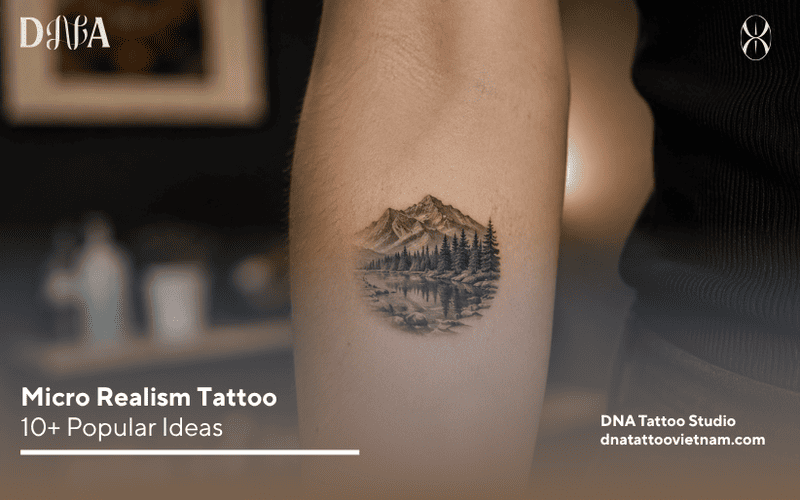
Fine line tattoo is known for its delicate, precise style and subtle look. DNA Tattoo can help you choose the right design and placement, whether you’re planning a custom piece or visiting a tattoo studio walk in.
1. What is a fine line tattoo?
Fine line tattooing is a distinct discipline within the broader tattoo world. Understanding its core characteristics sets realistic expectations before you book a session at a tattoo shop – and helps you have a more productive conversation with your artist.
The fine line tattoo style has gained significant traction in recent years because of its clean, simple, and elegant visual layout. Unlike traditional tattooing, which relies on thick, bold outlines to define shapes, the fine line technique uses a single needle – or very tight needle groupings – to produce delicate, highly precise marks on the skin. This approach is often referred to as single needle tattooing and sits at the technical heart of the style.
The result is an ink style that feels artistic rather than aggressive, reflecting the refined aesthetic often associated with modern tattoo studio design. That quality has made the fine line tattoo particularly popular among younger clients and those who prefer a more understated form of self-expression.
Design range within fine line tattooing
The fine line technique supports a wide variety of design possibilities. The most commonly chosen subjects include:
- Animals – birds, cats, and wolves are among the most requested, as fine line work renders fur and feather detail with impressive accuracy.
- Floral designs – one of the most classic choices; thin strokes capture the natural structure of petals and stems in a way that heavy needlework cannot.
- Geometric patterns – clean angles and precise curves translate naturally into fine line work, producing results that feel both mathematical and artistic.
- Script and calligraphy – names, dates, and meaningful quotes rendered in fine line lettering carry a quiet elegance that heavier fonts rarely achieve.
- Minimalist shapes – abstract marks, dots, and simplified forms that communicate meaning with minimal visual weight.
Each of these design categories benefits directly from the style’s precision. Thin strokes can capture detail that heavier needle groupings would obscure or distort.

2. Popular fine line tattoo design ideas
The fine line style accommodates an exceptionally wide range of subjects – from intricate botanical compositions to stripped-down geometric forms. Understanding which design directions work best within this technique helps you arrive at a concept that is both visually strong and personally meaningful.
2.1. Floral designs
Flowers are among the most consistently requested subjects in fine line tattooing, and their popularity is well-founded. The technique’s thin, controlled strokes capture the natural structure of petals, stems, and leaves with a level of organic detail that heavier needle work tends to flatten or obscure.
Floral choices frequently carry symbolic meaning beyond their visual appeal:
- Roses – one of the most enduring tattoo subjects worldwide, associated with love, passion, and emotional intensity.
- Lavender – linked with calm, clarity, and quiet resilience; a popular choice for its both its delicate appearance and its meaning.
- Cherry blossom – references the beauty of impermanence, a concept with deep roots in Japanese artistic tradition.
Because florals span from highly detailed botanical illustrations to minimal single-stem compositions, they suit a wide range of client preferences – from those who want something visually bold to those who prefer something barely-there.


2.2. Geometric and minimalist designs
Geometric patterns translate naturally into fine line work. Clean angles, precise curves, and repeating forms benefit directly from the technique’s accuracy, producing results that feel deliberate and considered rather than decorative.
Minimalist tattoo ideas – abstract marks, single lines, small symbolic shapes – also perform well in fine line format. The restraint of the technique matches the restraint of the concept, and the result is a piece that communicates clearly without visual noise. This category is particularly popular among clients getting their first tattoo, as the designs tend to be smaller, less intimidating, and easier to place discreetly.

2.3. Script and calligraphy
Names, meaningful dates, short phrases, and single words rendered in fine line lettering carry a quiet precision that heavier fonts rarely achieve. The technique allows for genuine typographic detail – serifs stay sharp, curves stay smooth, and spacing remains consistent in a way that thick needles cannot reliably produce.
Script fine line tattoos work especially well on the inner arm, collarbone, and ribcage, where the long horizontal or vertical format of lettering fits naturally with the body’s proportions.


2.4. Animal and portrait subjects
Animal fine line tattoos – particularly birds, cats, and wolves – have become a consistent category within the style. Fine line work can render fur texture, feather gradients, and facial expression with a level of detail that makes small-format animal portraits genuinely impressive rather than merely decorative.
The technique’s precision is equally effective for human portrait work at a micro scale, a format closely associated with the micro-realism style that draws heavily on fine line methodology.


3. Best body placement for fine line tattoos
Placement is arguably the most consequential decision a client makes after choosing a design. Fine line tattoos have specific placement requirements that differ meaningfully from bolder styles, and choosing wisely at the outset dramatically affects how the tattoo ages.
3.1. Why the inner arm is a top recommendation
The inner arm – covering both the forearm and the area near the bicep – is widely regarded as one of the best locations for a fine line tattoo. Several factors make this zone particularly suitable for fine line tattoo placement.
First, sun protection is manageable. UV exposure is one of the primary causes of tattoo fading, and fine line work is especially vulnerable because the lines are thinner and contain less ink volume than bold designs. The inner arm is easy to cover with clothing and simple to protect with sunscreen, making long-term UV management realistic.
Second, the inner arm avoids common physical stressors. Areas that experience regular friction from clothing, frequent bending at joints, or significant skin stretching due to weight or muscle change tend to distort ink more rapidly. The inner arm sidesteps most of these risks, making it a reliable long-term home for detailed fine line work.
Third, display potential is high. Clients can choose to show their tattoo when they want and cover it discreetly when the situation calls for it – a practical consideration for professional environments.

3.2. Other placement options worth considering
Beyond the inner arm, several other locations suit fine line tattooing well:
- Upper back and shoulder blade – low friction, generally covered placement and a generous canvas for larger fine line compositions.
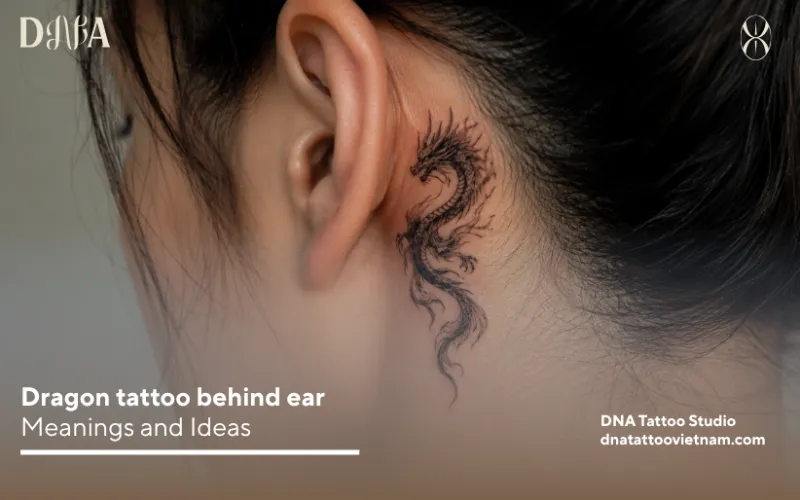
- Behind the ear – well-suited for small fine line tattoo designs such as minimal symbols or tiny floral sprigs.
- Ribcage – allows for longer vertical compositions; less subject to everyday friction than the hands or feet.
- Ankle and shin – suitable for small, simple pieces, though healing requires attention due to proximity to the ground.

Placement comparison
| Location | Sun exposure risk | Friction risk | Display potential | Fine line suitability |
| Inner arm | Low | High | Low | Excellent |
| Upper back | Average | Low | Medium | Excellent |
| Behind the ear | Low | Low | Medium | Good |
| Ribcage | Low | High | Medium | Good |
| Fingers/hands | High | High | High | Poor |
| Feet/ankles | Negative | Negative | Negative | Negative |
Areas to approach with caution include fingers, the sides of hands, and the tops of feet. High friction and constant movement in these zones cause fine line ink to fade or blur significantly faster than on more sheltered areas.
4. Understanding longevity and aging
One of the most frequently asked questions about this style is direct: does a fine line tattoo fade more than other types of ink?
The honest answer is yes – fine line tattoos are generally more susceptible to fading over time than bold-line tattoos. However, several factors influence how gracefully a fine line piece ages, and with the right approach, these tattoos can remain sharp for many years.
4.1. Tattoo styles that use fine line technique
Fine line work is not limited to any single aesthetic. The technique appears prominently across a number of established tattoo styles, including:
- Minimalism – stripped-down compositions that depend entirely on the precision of thin lines.
- Micro-realism – small-scale photorealistic pieces that require single-needle accuracy to render facial features, textures, and gradients.
- Illustrative tattooing – work that references illustration and printmaking traditions, often combining fine line outlines with delicate shading.
- Chicano-style – a style with deep cultural roots that frequently incorporates fine line lettering, portraits, and symbolic imagery.
Choosing a fine line tattoo does not confine you to a single look. The technique sits within a rich and diverse creative tradition that spans multiple visual languages.
4.2. Healing and maintenance advantages
One practical advantage of fine line work is its healing behavior. Because fine line tattoos place less mechanical stress on the skin during the tattooing process than bolder designs, they tend to heal faster. This shorter healing window can reduce infection risk and allows clients to return to normal activities sooner.
To maintain a fine line tattoo’s appearance over the long term, the following practices are consistently recommended:
- Protect from UV light – apply a high-SPF, fragrance-free sunscreen over healed tattoos whenever they will be exposed to sunlight.
- Moisturize regularly – keeping the skin hydrated slows the breakdown of ink pigment beneath the surface.
- Choose placement wisely – areas with low friction and limited sun exposure retain fine line detail far longer than high-stress zones.
- Plan for touch-ups – a skilled fine line tattoo artist or the best tattoo artist in Hanoi can refresh faded lines after several years to restore the original clarity of the design. Touch-ups are a normal part of fine line tattoo ownership, not a sign of poor quality.

FAQ
1. What is the difference between a fine line tattoo and a traditional tattoo?
A traditional tattoo uses thick, bold outlines and heavy color fills designed for high visibility and long-term durability. A fine line tattoo uses a single needle or very tight groupings to produce precise, delicate lines. The result is a more refined aesthetic, though fine line work requires more careful placement and consistent aftercare to age well.
2. Does a fine line tattoo fade faster?
Yes – fine line tattoos are more susceptible to fading than bold-line styles because the lines contain less ink volume. Longevity depends heavily on placement, UV protection, skin type, and aftercare quality. Areas with low friction and limited sun exposure – such as the inner arm – retain fine line detail the longest.
3. What tattoo styles use fine line technique?
Fine line technique is a core element of several popular tattoo styles, including minimalism, micro-realism, illustrative tattooing, and Chicano-style. Each applies the precision of fine line work within its own distinct visual framework, giving clients a wide range of aesthetic options.
4. Is a custom fine line design worth the extra consultation time?
Yes. A custom design is adapted to your proportions, your placement, and your personal meaning – qualities that a pre-made flash tattoo Hanoi design cannot offer. The additional consultation time results in a piece that is genuinely yours and is more likely to suit your body over the long term.
Fine line tattoo remains one of the most versatile and aesthetically refined options available in modern tattooing. Its appeal lies in precise detail work, a subtlety that bolder styles cannot replicate, and a breadth of design possibilities that suits almost any personal aesthetic. Informed decisions about design, placement, and ongoing care are what determine how well a fine line piece holds up over time. This guide provides the foundational knowledge every prospective client needs before sitting in the chair.
Ready to bring your fine line tattoo concept to life? At DNA Tattoo Vietnam, recognized by many clients as the best tattoo studio Hanoi for fine line work, our artists specialize in clean, precise fine line work in a fully hygienic and professional studio environment. Whether you have a clear design in mind or are still exploring ideas, we offer free consultations to help you make the right decision. Book your appointment today at dnatattoovietnam.com – or send us a message directly to get started.
If you have any questions or need more information about our tattoo services at DNA Tattoo Vietnam, feel free to contact us through the following channels:
- Hotline: (+84) 368 000 690
- Email: dnatatstudio@gmail.com
- Website: https://dnatattoovietnam.com/
- Facebook: https://www.facebook.com/dnatatstudio/
- Instagram: https://www.instagram.com/dna.tattoostudio/
- Google Map: https://www.google.com/maps?cid=12105924435380523917