Irezumi tattoo combines Japanese folklore, spirituality, and cultural symbolism in intricate body art. DNA Tattoo Shop can help you understand its meaning and choose the right design at a trusted ink tattoo shop.
1. What is an irezumi tattoo?
The irezumi tattoo is a traditional Japanese style of tattooing built around dense, symbolic imagery drawn from nature, folklore, and religious themes. The word irezumi literally means “inserting ink” – a term that refers both to the technical act of tattooing and to the broader Japanese tattoo tradition as a whole.
These tattoos are typically large-scale works, designed to cover the arms, back, or legs. More importantly, they are not decorative in the conventional sense. Each irezumi tattoo is composed to tell a story or to represent the wearer’s aspirations, values, and spiritual protection.
Traditional Japanese irezumi is the decoration of the body with mythical beasts, flowers, leaves, and other images drawn from stories, myths, and cultural tales. In this sense, wearing an irezumi design is treated as an “aspiration” – a visual statement of how the wearer chooses to live and what they value most deeply.

2. History and origins of irezumi
Understanding the irezumi tattoo requires knowing where it comes from – because this style carries centuries of cultural weight that directly shapes the symbolism used today.
2.1. Ancient roots and early evidence
Irezumi has roots stretching back to early Japanese history. Archaeological evidence of tattoo-like markings has been found on Jomon-period clay figurines, and later practices appear during the Kofun period. These early markings suggest that bodily decoration held spiritual or social significance long before tattooing became an artform in the modern sense.
2.2. The Edo period and the rise of pictorial tattooing
The irezumi style as it is recognized today evolved during the Edo period. Colorful woodblock prints of that era directly inspired elaborate pictorial tattoos, which became common among firefighters, laborers, and those living outside the mainstream social structure. The aesthetic vocabulary of irezumi – its dragons, waves, koi, and mythological figures – owes a great deal to this period’s visual culture.
2.3. The Yakuza association and preservation of the craft
Over time, irezumi became closely associated with the Yakuza, Japan’s organized crime groups. This connection added significant social stigma to the art form, particularly as Japan modernized and legal bans were imposed on tattooing during certain eras. Despite this, the Yakuza’s embrace of irezumi also helped preserve its techniques and traditions when they might otherwise have disappeared. Today, irezumi is practiced and appreciated worldwide as a legitimate and highly respected tattoo discipline.

3. Core motifs and irezumi symbolism
Every element within an irezumi tattoo carries specific meaning. This is not a style where imagery is chosen for visual appeal alone – each motif is selected as a statement of identity, belief, or intention.
The most commonly used motifs in traditional irezumi designs include:
- Koi fish – Representing perseverance and personal transformation. The koi’s journey upstream against strong currents has long been associated with overcoming adversity.
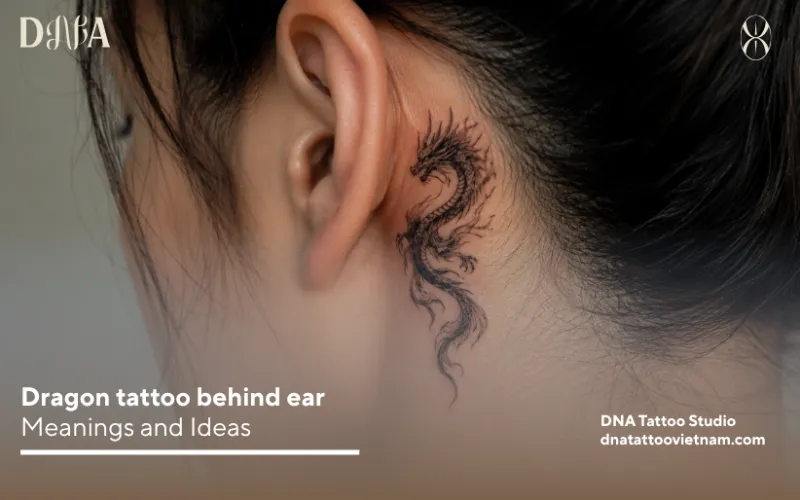
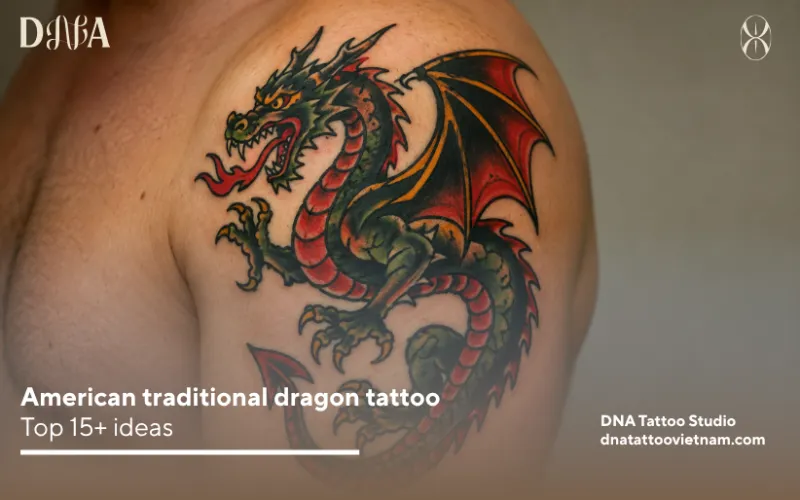
- Dragons – Symbolizing wisdom, protection, and spiritual power. Unlike Western dragons, Japanese dragons are generally benevolent forces associated with water and the heavens.
- Cherry blossoms – Standing for the fleeting and precious nature of life. Their brief bloom and fast fall reflects a Buddhist-influenced acceptance of impermanence.
- Lotus flowers – Associated with purity and spiritual growth, particularly in Buddhist iconography. The lotus rises clean from muddy water, symbolizing rising above difficult circumstances.
- Waves – Expressing fluidity, resilience, and the constant movement of life.
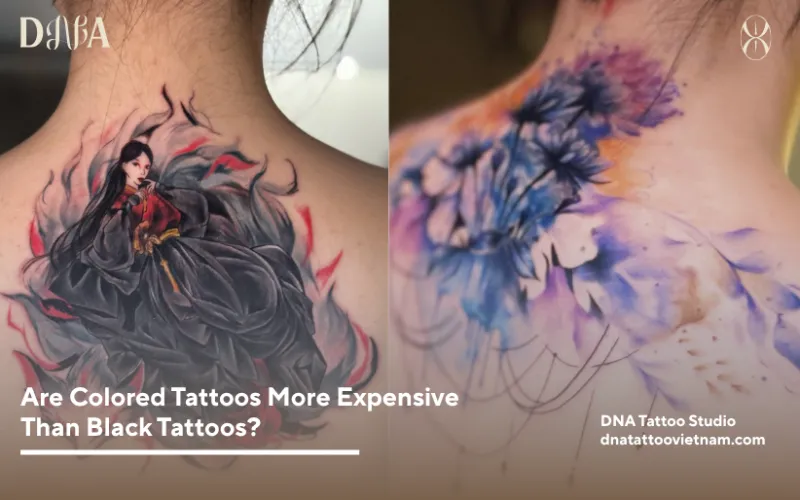
Color also carries symbolic weight within irezumi. Red may indicate passion or protective energy, black represents authority and depth, and blue is often associated with calm and spiritual meaning. These are not arbitrary aesthetic choices – they are part of a coherent visual language built over centuries.

4. Popular mythological creatures in irezumi
Mythological creatures are central to the irezumi tattoo tradition, particularly in full-body suits and large-scale back pieces where they form the dramatic focal point of an entire composition.
4.1. Dragons
Dragons are among the most requested irezumi subjects. They are frequently depicted alongside flowing clouds, crashing waves, and fire – each element chosen to amplify specific symbolic dimensions. A dragon in irezumi represents strength, protection, and spiritual authority. The composition is rarely static; irezumi dragons are almost always depicted in motion, conveying dynamic power.

4.2. Koi Fish
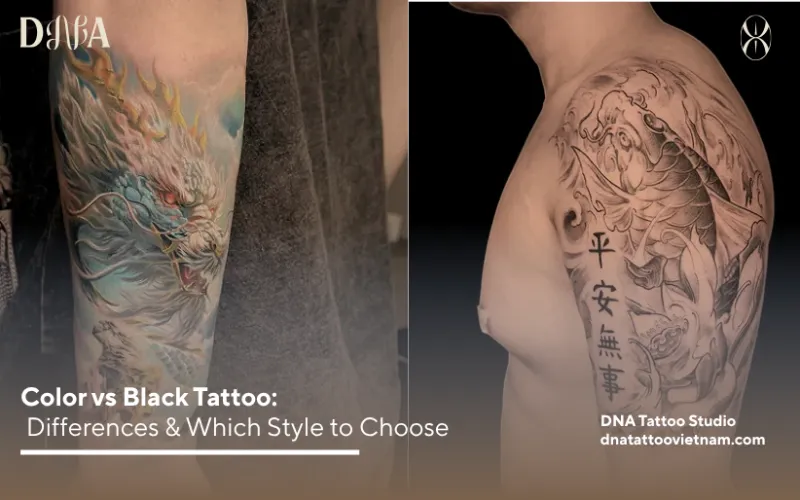
The Koi fish is a classic subject for an irezumi tattoo, symbolizing perseverance and good fortune. Inspired by the legend of a carp swimming upstream to become a majestic dragon, it represents an iron will and the ability to overcome adversity. Often paired with crashing water waves (nami) or cherry blossoms (sakura), this design acts as a lucky charm to attract wealth and prosperity.

4.3. Tigers (Tora)
The Tiger (Tora) is the supreme symbol of power, courage, and ferocity in Japanese culture. A tiger-themed irezumi tattoo serves as a spiritual guardian, historically meant to ward off evil spirits, disease, and bad luck. In traditional compositions, the earthly tiger is frequently paired with the heavenly dragon to create a perfectly balanced Yin-Yang dynamic on the body.

4.4. Phoenix (Hou-ou)
The Japanese Phoenix (Hou-ou) is a sacred mythical bird representing peace, rebirth, and eternal beauty. When applied to an irezumi tattoo, it symbolizes justice and loyalty through intricate linework and vibrant five-colored plumage. Because of its magnificent detail, this breathtaking design is typically reserved for large, prominent placements like a full backpiece or chest panel.

4.5. Oni and Hannya Masks
Despite their terrifying appearance, Oni and Hannya masks hold deep cultural significance in an irezumi tattoo. Oni act as fierce guardian deities. They use their demonic nature to protect the wearer from malevolent forces. Meanwhile, the Hannya mask represents a woman consumed by extreme jealousy. This image serves as a powerful philosophical reminder to understand and master personal negative emotions.

5. How irezumi designs are structured on the body
One of the most distinctive aspects of the irezumi tattoo is how it is planned and composed relative to the body itself. Unlike many Western tattoo approaches where individual pieces are placed independently, irezumi artists often conceive of the body as a single canvas.
5.1. The concept of integrated suits
Irezumi artists frequently plan tattoos as integrated “suits” – unified compositions across the arms, back, or legs. This approach ensures that all elements relate to one another visually and symbolically, rather than existing as isolated images. The same principle often influences professional tattoo studio design, where flow, balance, and visual storytelling are carefully considered throughout the creative environment.
5.2. Classical compositional models
Two classical irezumi layout structures define how compositions are built:
- Nuki-bori – A clean, standalone motif approach without an extensive background. This model emphasizes clarity of form, allowing the central subject – a dragon, koi, or mythological figure – to stand prominently without visual competition.
- Gaku-bori – A framed composition with integrated backgrounds that unify the entire tattoo into a single structure. Background elements such as clouds, water, and wind bars serve as linking devices between the foreground figures.
In the gaku-bori approach, the result is a dynamic, almost pictorial scene that moves across the body rather than sitting as isolated elements. The irezumi tattoo, when composed this way, functions less like individual artwork and more like a mural – one that the wearer carries and inhabits.

6. Choosing the right irezumi tattoo for you
Selecting an irezumi tattoo is a considered process. This is a large-scale, symbolically dense commitment, and the decisions made at the planning stage have long-term consequences – both aesthetically and personally.
6.1. Match symbolism to personal values
The most effective irezumi tattoos are those where the chosen motifs genuinely reflect the wearer’s values or life experiences. A koi moving upstream resonates differently than a phoenix – the first speaks to endurance through ongoing struggle, while the second speaks to transformation after a major change. Consider what each element means before selecting it.
6.2. Consider placement and visibility
Placement is a practical consideration as well as an aesthetic one. Irezumi designs on the hands, neck, or face carry significantly more social visibility than a back piece or arm sleeve. In some professional and cultural contexts – particularly in Japan – visible tattoos still carry social implications. For international clients, this is worth considering based on personal and professional circumstances.
6.3. Work with an artist who understands the tradition
The irezumi tattoo is a culturally specific discipline with its own compositional logic, symbolic conventions, and technical requirements. Working with an artist who understands traditional Japanese composition and the cultural context of each motif will result in a piece that functions as intended – not just visually, but symbolically. Many clients specifically seek guidance from the best tattoo artist in Hanoi when planning large-scale irezumi compositions due to the style’s technical complexity. Many clients begin with a single specific motif such as a koi, dragon, or cherry blossom and build a larger narrative composition around it over subsequent sessions.

FAQ
1. What does an irezumi tattoo represent?
An irezumi tattoo represents the wearer’s personal aspirations, values, and spiritual protection through symbolic imagery drawn from Japanese folklore and nature. Common meanings include perseverance (koi), wisdom and strength (dragon), impermanence (cherry blossom), and spiritual growth (lotus). Each design element is chosen with specific intent, not purely for decoration.
2. Is irezumi a specific tattoo technique or a style?
Irezumi refers to both a technique and a broader Japanese tattoo tradition. Historically, it used hand tools to insert ink into the skin. Today the term encompasses the overall visual style – characterized by bold symbolic motifs, flowing compositions, and traditional Japanese imagery – regardless of whether hand or machine tools are used.
3. How long does an irezumi tattoo take to complete?
Large-scale irezumi pieces – such as full back suits, sleeves, or body suits – are almost never completed in a single session. Depending on size and complexity, a full irezumi composition can require dozens of hours spread across multiple sessions over months or even years, which is also why Hanoi tattoo prices for irezumi work are usually calculated based on scale, detail, and total session time. Planning and patience are essential parts of the process.
4. Can non-Japanese people get an irezumi tattoo?
Yes. While irezumi originates from Japanese culture and carries significant historical and cultural weight, the style is practiced and worn by people worldwide. The most important approach is to engage with the tradition respectfully – understanding the symbolism of chosen motifs and working with a knowledgeable artist rather than selecting imagery arbitrarily.
An Irezumi tattoo is a visually sophisticated tradition where every design tells a meaningful story. Whether you desire a powerful dragon or a resilient koi, DNA tattoo studio combines artistic mastery with cultural respect to create your perfect piece, proudly standing as the best tattoo studio Hanoi.
Ready to explore an irezumi tattoo design that reflects your story? Contact DNA Tattoo for a free consultation with our artists – we will help you find the motifs, composition, and placement that are right for you.
If you have any questions or need more information about our tattoo services at DNA Tattoo Vietnam, feel free to contact us through the following channels:
- Hotline: (+84) 368 000 690
- Email: dnatatstudio@gmail.com
- Website: https://dnatattoovietnam.com/
- Facebook: https://www.facebook.com/dnatatstudio/
- Instagram: https://www.instagram.com/dna.tattoostudio/
- Google Map: https://www.google.com/maps?cid=12105924435380523917