A few days after your session, the fresh look fades and a crust forms over the lines. This is tattoo scabbing and it catches most people off guard the first time. While a thin, lightly flaking layer of scabs is a normal part of the healing process, a thick, hard crust is not. In this article, DNA Tattoo Studio breaks down what causes it, how to spot the warning signs, how scabbing differs from peeling, and how to care for your skin until it heals.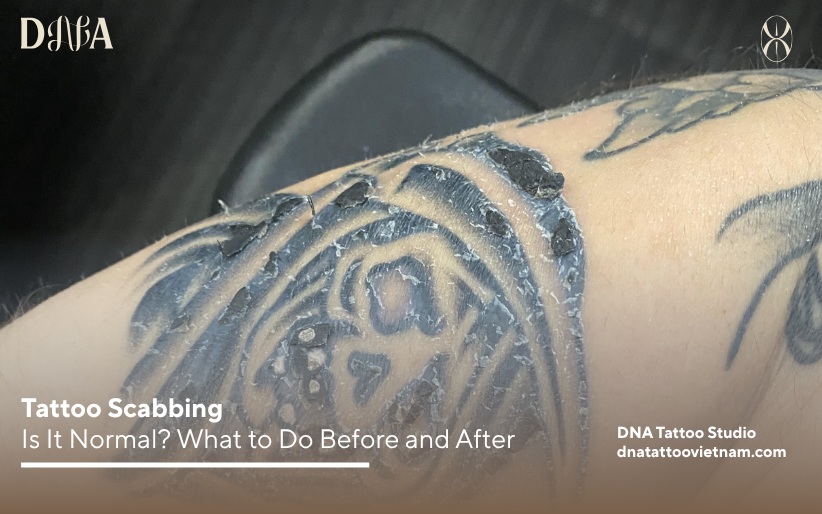
1. What is tattoo scabbing?
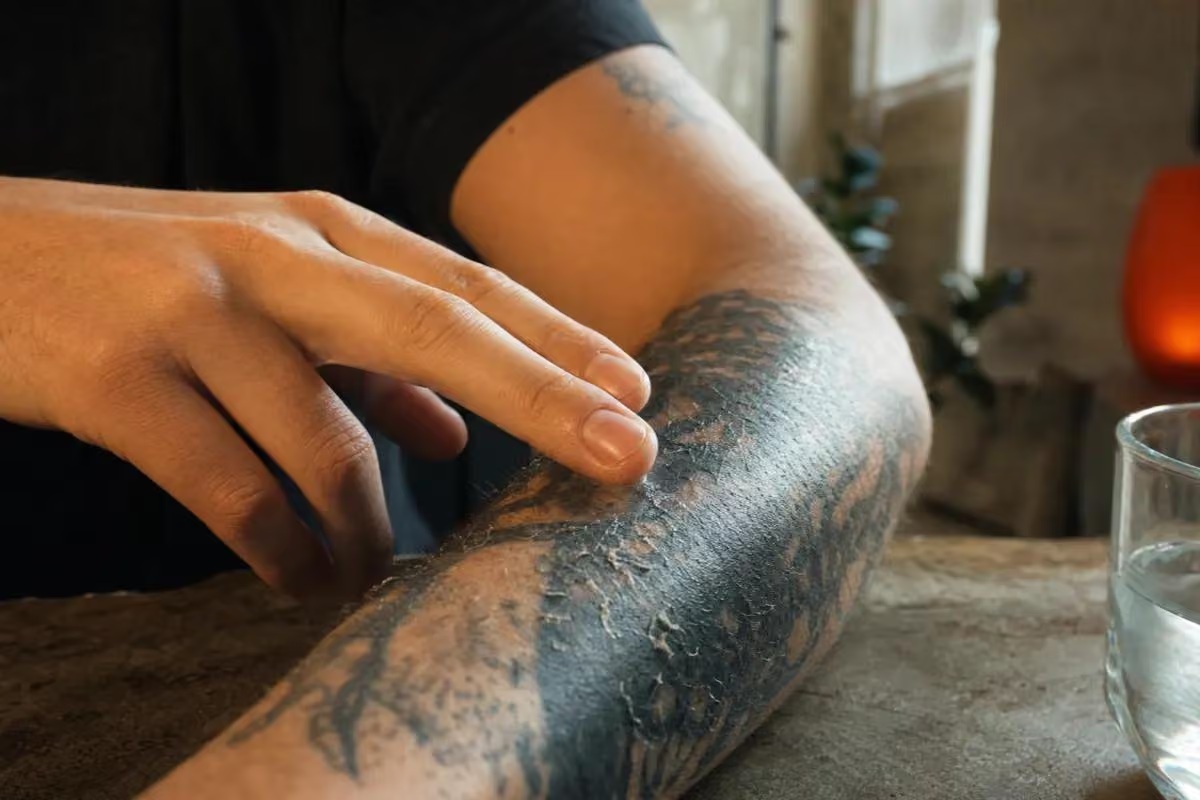
Tattoo scabbing is a natural crust that forms over a new tattoo as your body heals the micro-wounds created by the tattoo needles. Plasma rises to the surface, mixes with excess ink and dead skin cells, then dries into a protective layer.
This scab helps protect the healing skin from bacteria while new skin cells rebuild the damaged surface. Once the skin underneath has recovered, the scab loosens and falls off naturally.
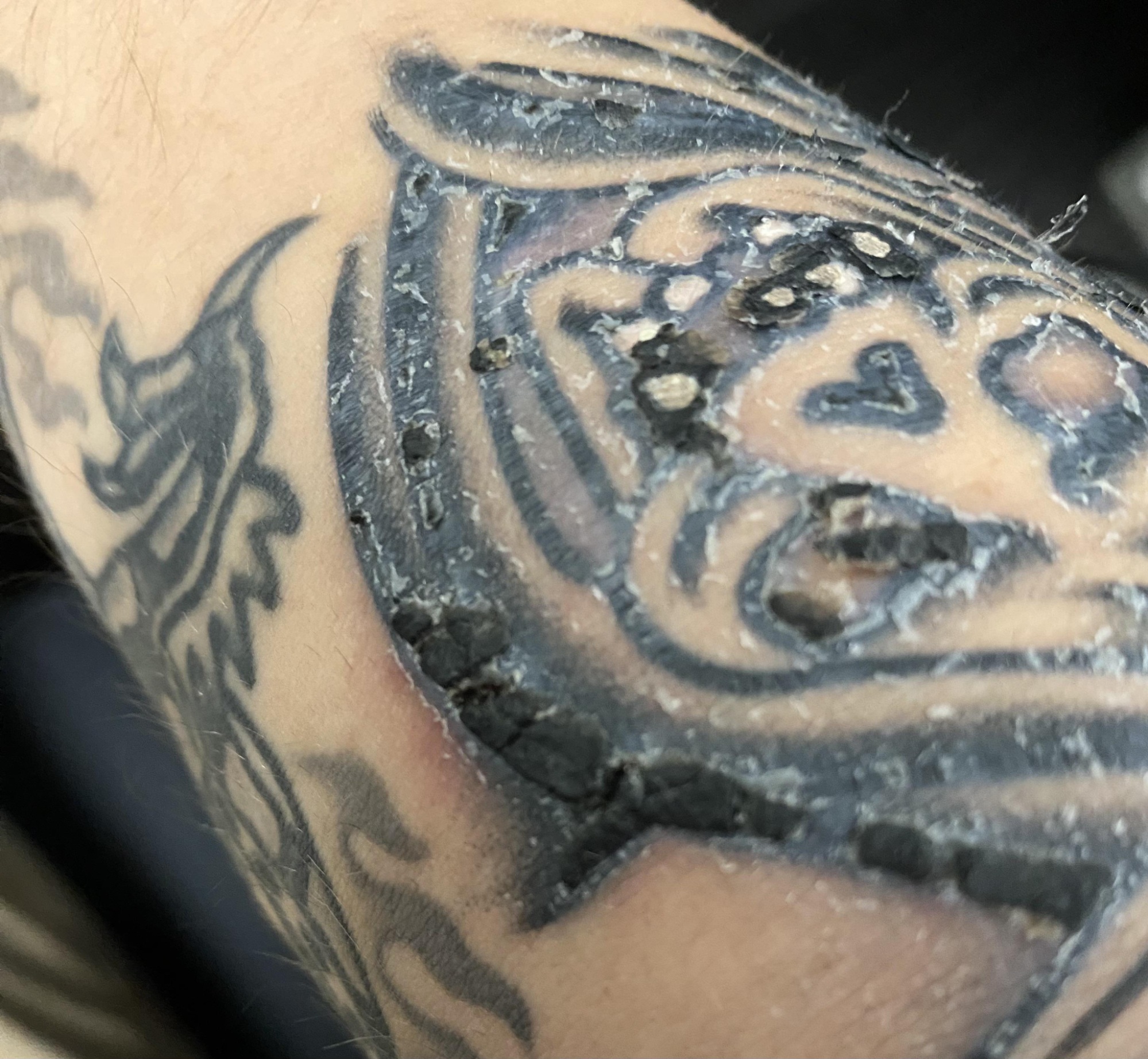
Two details are important to understand. First, tattoo ink sits in the dermis beneath the healing surface, so allowing a scab to fall away naturally helps protect the pigment and reduce the risk of patchiness.
Second, the amount of scabbing can vary depending on the tattoo’s size, placement, technique, individual skin response and aftercare. Thick or worsening scabs may indicate irritation or delayed healing, especially when accompanied by increasing pain, spreading redness or unusual discharge.
2. Is it normal for a tattoo to scab?
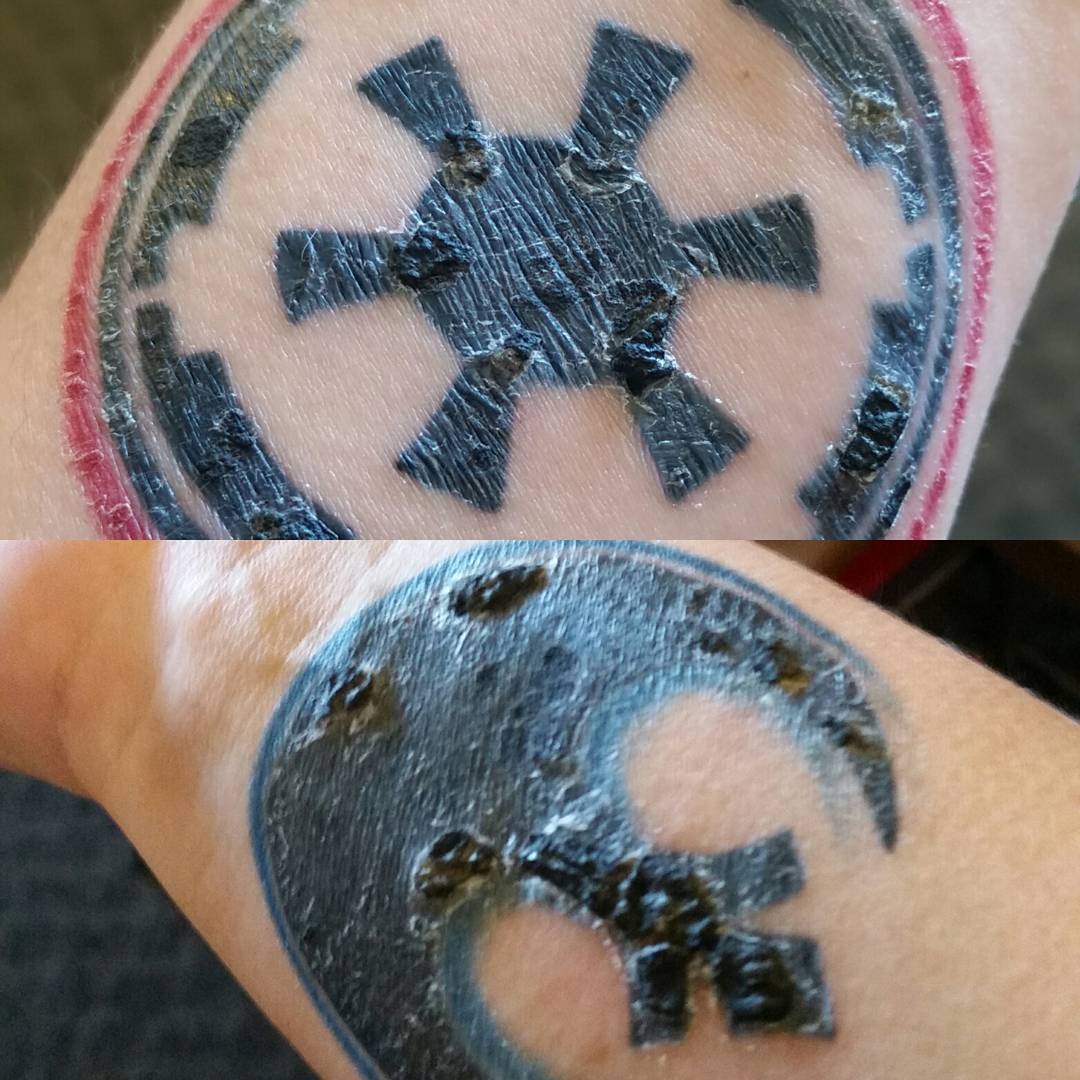
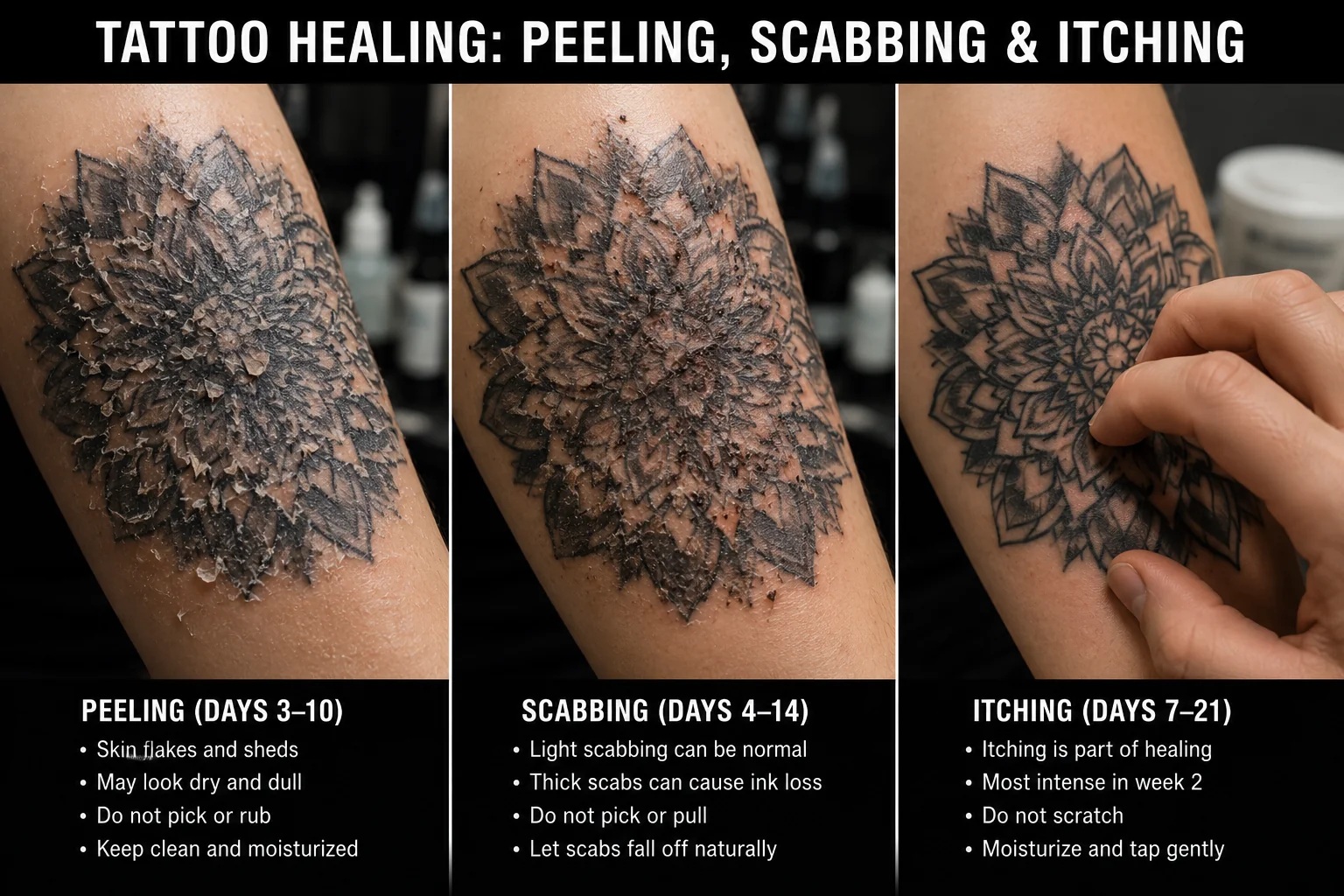
Light, thin tattoo scabbing or flaking is a completely normal part of the healing process. Most tattoos go through it to some degree, and larger or heavily shaded pieces almost always do. What is not normal is thick, heavy, raised crusting.
That usually means the skin was overworked with too much pressure or too many passes, that it was kept far too dry or far too wet in the first week, or that an infection has set in. So the answer is: scabbing itself is expected but the character of the scab tells you whether healing is on track.
2.1 What normal tattoo scabbing looks like
Normal tattoo scabbing is usually light, dry and gradually improves as the skin heals, with the following common signs:
- Thin flakes: Light peeling or small, translucent flakes that resemble a mild sunburn rather than a wound crust.
- Colour: Clear fluid or pale-yellow dried plasma, sometimes tinted with a little surface ink.
- Timeline: Flaking typically starts 3 to 5 days after your appointment and clears within about two weeks. Mild redness, swelling and soreness peak in the first 2 to 3 days and then steadily improve.
- Mild symptoms: Slight itching and a little pinkness around the area as nerve endings and skin cells regenerate over 2 to 4 weeks.
- Direction of travel: Everything gets better day by day, never worse.
2.2 Signs your tattoo scabbing is not normal
Abnormal tattoo scabbing is often thick, wet or worsening and may be accompanied by the following warning signs:
- Thick crusts: Raised, hard scabs may crack or trap moisture due to irritation, friction or excess moisture. Seek advice if they become increasingly painful, swollen or wet.
- Colour and discharge: Thick green, yellow or foul-smelling pus oozing days or weeks after the session, not the clear plasma of the first 48 hours.
- Spread: Worsening or throbbing pain, intense heat radiating from the skin, red streaks running away from the tattoo, fever or chills.
- Sensations and systemic signs: Worsening or throbbing pain, intense heat radiating from the skin, red streaks running away from the tattoo, fever or chills.
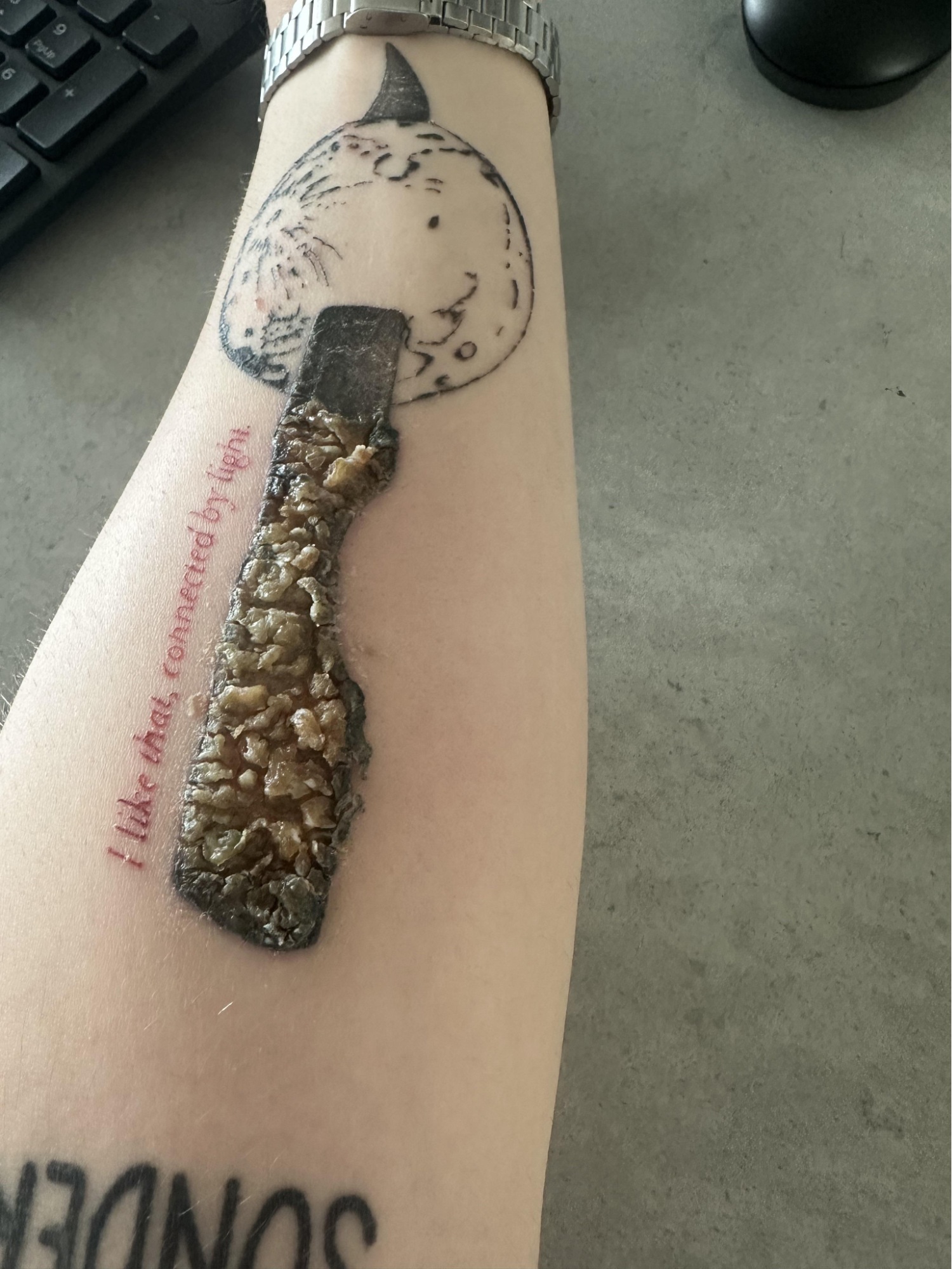
One honest caveat: telling an overworked area apart from an early infection is genuinely hard at home, especially when ink colours tint the fluid and mimic discharge. If the symptoms above persist or escalate, stop diagnosing and get a professional opinion.
3. Tattoo scabbing vs tattoo peeling: what’s the difference?
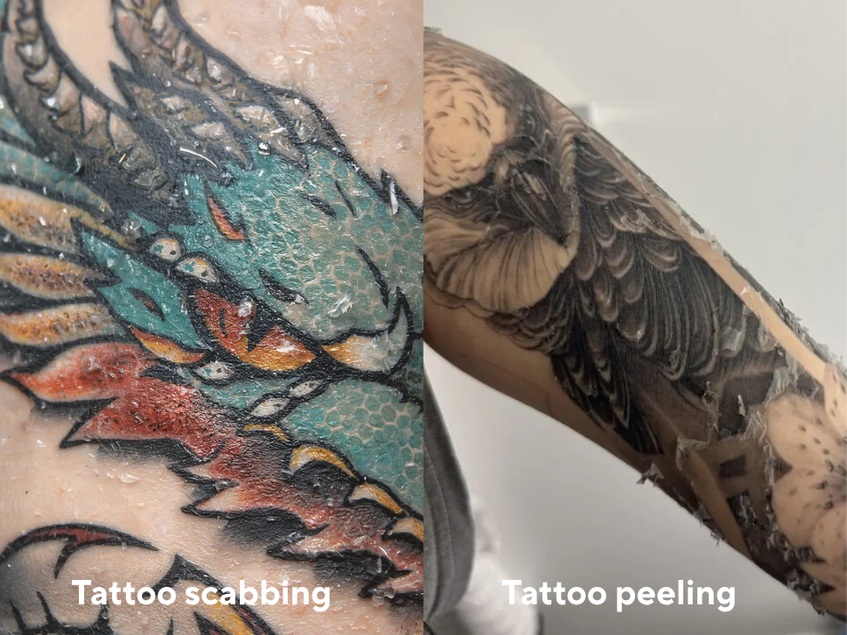
Tattoo peeling occurs when dry surface skin sheds during healing. Scabbing involves dried plasma, excess ink and wound fluid forming a protective crust over the tattoo. Light scabbing can be normal, while thick, cracked or worsening crusts require attention, especially with increasing pain, spreading redness or discharge.
| Tattoo peeling | Tattoo scabbing | |
| What it looks like | Thin, translucent flakes of dead skin, similar to a mild sunburn | Thick, raised, hard or crusty patches, sometimes tinted with ink colour |
| Texture | Dry, papery, lifts easily at the edges | Rigid, leathery, may crack or feel like a shell |
| What it means | The epidermis is naturally shedding, and healed ink stays safe in the dermis below | The skin took deep trauma from heavy needle work, or the wound was smothered by too much ointment trapping fluid |
| When it happens | Roughly days 3 to 5 through the end of week two | From day 2 or 3 onward, and it lingers longer the thicker it is |
| Risk level | Usually low when the flakes are allowed to shed naturally | Light scabbing may be normal, but thick, cracked or oozing scabs may increase the risk of uneven healing |
| What to do | Wash gently, apply a light unscented moisturiser, let flakes shed on their own | Leave it strictly alone, keep the area clean and only lightly moisturised, and have it assessed if it worsens |
4. What to do when your tattoo is scabbing?
When a tattoo scabs, leave the scabs alone to heal naturally and keep the area clean and lightly moisturised. Everything below is a version of that one principle.
4.1 What to do
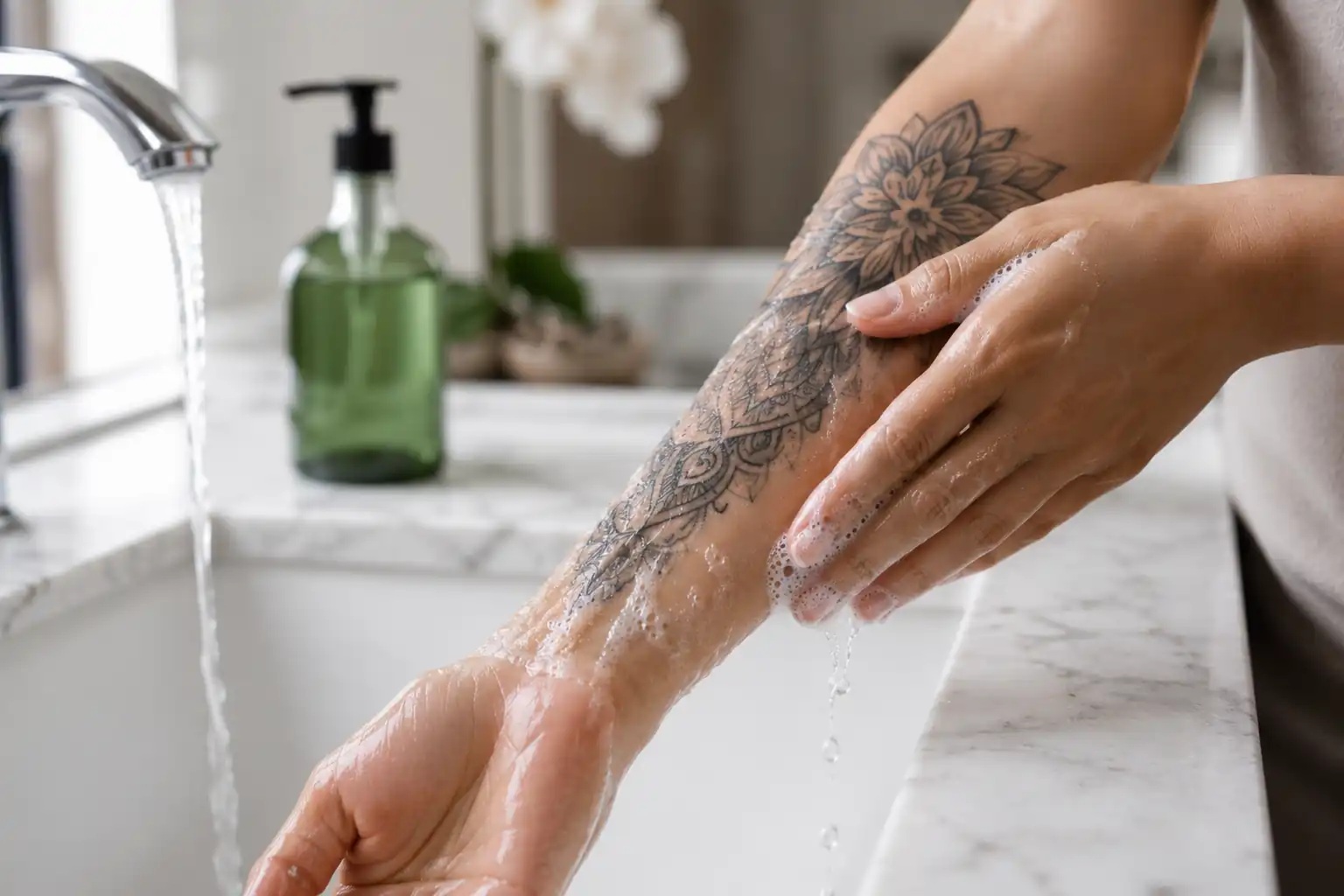
- Wash gently: Clean the tattoo with clean hands, lukewarm water and a mild, fragrance-free soap, following your artist’s instructions on frequency. Avoid using washcloths, loofahs or abrasive materials that may rub against the scabs.
- Pat dry: Blot the skin with a clean paper towel, then let it air dry completely before you put anything on it.
- Moisturise sparingly: Apply a thin layer of fragrance-free moisturiser recommended by your artist. If the scab becomes wet, soft or sticky, contact your artist for advice.
- Wear loose clothing: Choose soft, breathable fabrics that will not rub against or catch on a lifting scab.
- Let time do the work: A scab falls when the skin underneath is ready. That moment is the only correct moment.
Find out more: Post-tattoo care: How to help your tattoo heal properly
4.2 What not to do
To support proper healing, avoid these common mistakes:
- Do not pick, peel or scratch. This is the single most damaging thing you can do. Pulling a scab early pulls ink out with it, delays healing, and can leave permanent patchiness or a scar. If it itches, tap the area with a clean fingertip or add a thin layer of moisturiser instead.
- Do not soak the tattoo. Skip baths, swimming pools, hot tubs, saunas and long showers. Prolonged submersion softens a scab and lifts it off before the ink underneath has settled.
- Do not over-moisturise. Burying the tattoo in a thick layer of ointment suffocates the skin, keeps wound fluid from drying properly, and makes scabs thicker and goopier than they needed to be.
- Do not expose it to the sun. UV on a healing tattoo fades pigment and irritates skin that is already working hard. Cover it with clothing until it has fully healed.
4.3 When to see a doctor
Light flaking and small, dry scabs may occur during normal healing. However, seek prompt medical advice if redness spreads, pain or swelling worsens, pus develops, red streaks appear, or you experience swollen lymph nodes, fever or chills.
For mild symptoms that persist without improving, contact your tattoo artist for an initial assessment and aftercare guidance. If you notice signs of infection or a severe skin reaction, contact a qualified healthcare professional promptly rather than relying only on advice from the studio. Any need for a touch-up should be assessed after the tattoo has fully healed.

5. Traveling with a scabbing tattoo after leaving Hanoi
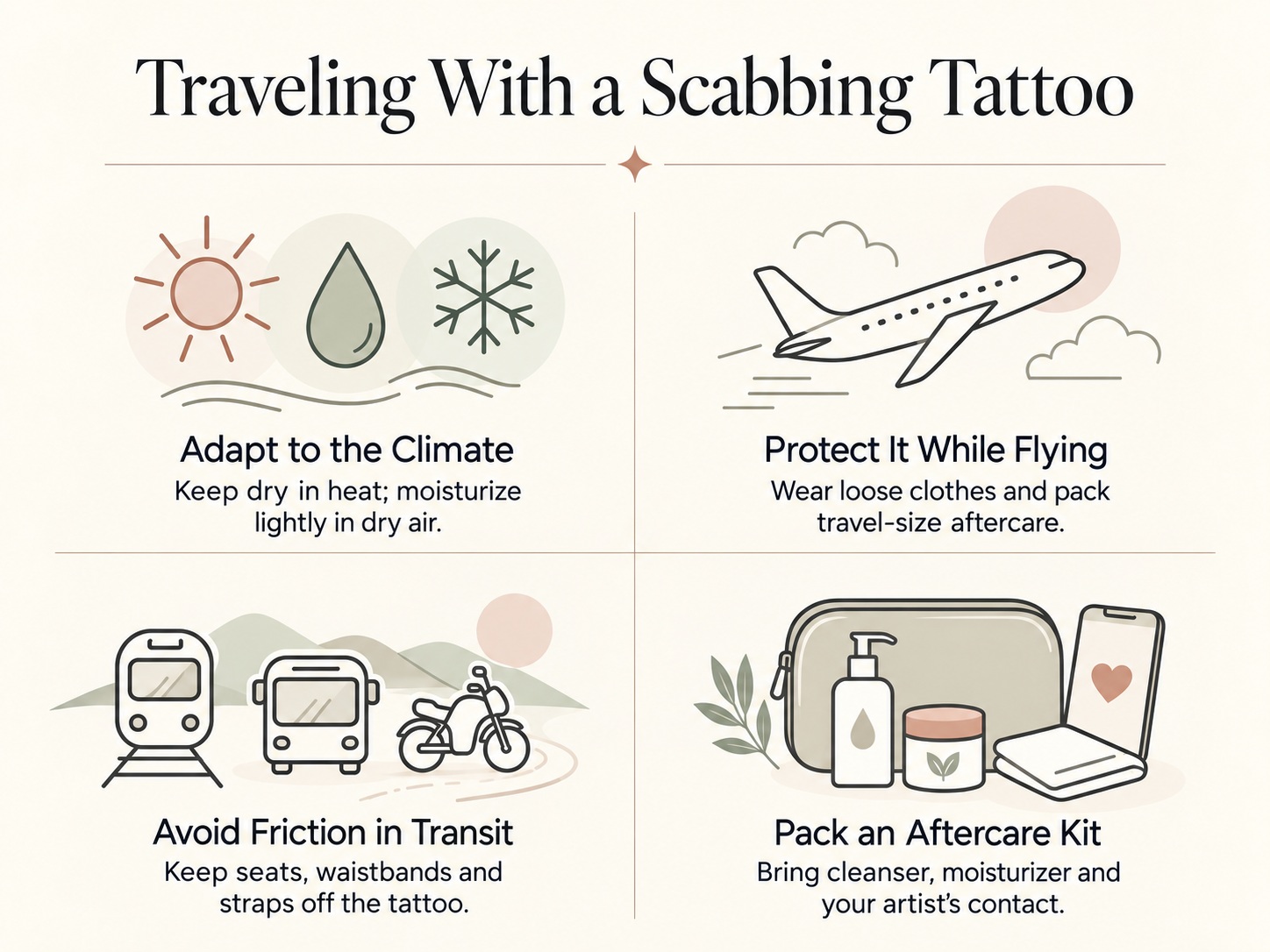
Your tattoo may still be scabbing when you leave Hanoi. Changes in climate, long journeys and friction can affect healing, so adjust your aftercare to your destination and transport.
- Traveling to another climate: In hot or humid areas, keep the tattoo clean and dry after sweating. In colder or drier places, apply only a thin layer of the moisturiser recommended by your artist. Always wear loose clothing and avoid picking the scabs.
- Taking a flight: Cabin air may dry the skin, while tight clothing and luggage straps can rub against scabs. Wear comfortable clothing, avoid touching the tattoo with unwashed hands and bring travel-size aftercare products.
- Traveling by train, bus or motorbike: Prevent seats, waistbands and straps from rubbing against the tattoo. When riding a motorbike, protect it from dust and sunlight with loose, clean clothing without wrapping it tightly.
- Prepare a simple aftercare kit: Bring basic aftercare supplies and save your artist’s contact details. Seek medical care if you notice spreading redness, worsening pain, pus, fever or chills.
6. DNA Tattoo Studio: plans for the tattoo, and the healing that follows
At DNA Tattoo Studio, the goal is not simply to finish a tattoo before you leave Hanoi. Our team considers how the design, session and upcoming travel plans may affect your experience while the skin heals and begins to scab.
6.1 Before: Build the tattoo around your schedule
Share your travel plans and tattoo ideas with DNA Tattoo Studio before the session. Our artist will advise on suitable timing, placement and design based on your upcoming flights, long journeys or destination climate. Your custom design can be revised without a set limit before the appointment, and you will receive a transparent quote based on the actual work required.
Plan your tattoo with DNA Tattoo Studio
Contact DNA Tattoo Studio:
- Address:41 Luong Su C, Dong Da, Hanoi (near Temple of Literature)
- Hotline / WhatsApp / Zalo: (+84) 368 000 690
- Website:dnatattoovietnam.com
- Facebook:facebook.com/dnatatstudio
- Instagram:instagram.com/dna.tattoostudio
6.2 During: Create with precision and professional hygiene
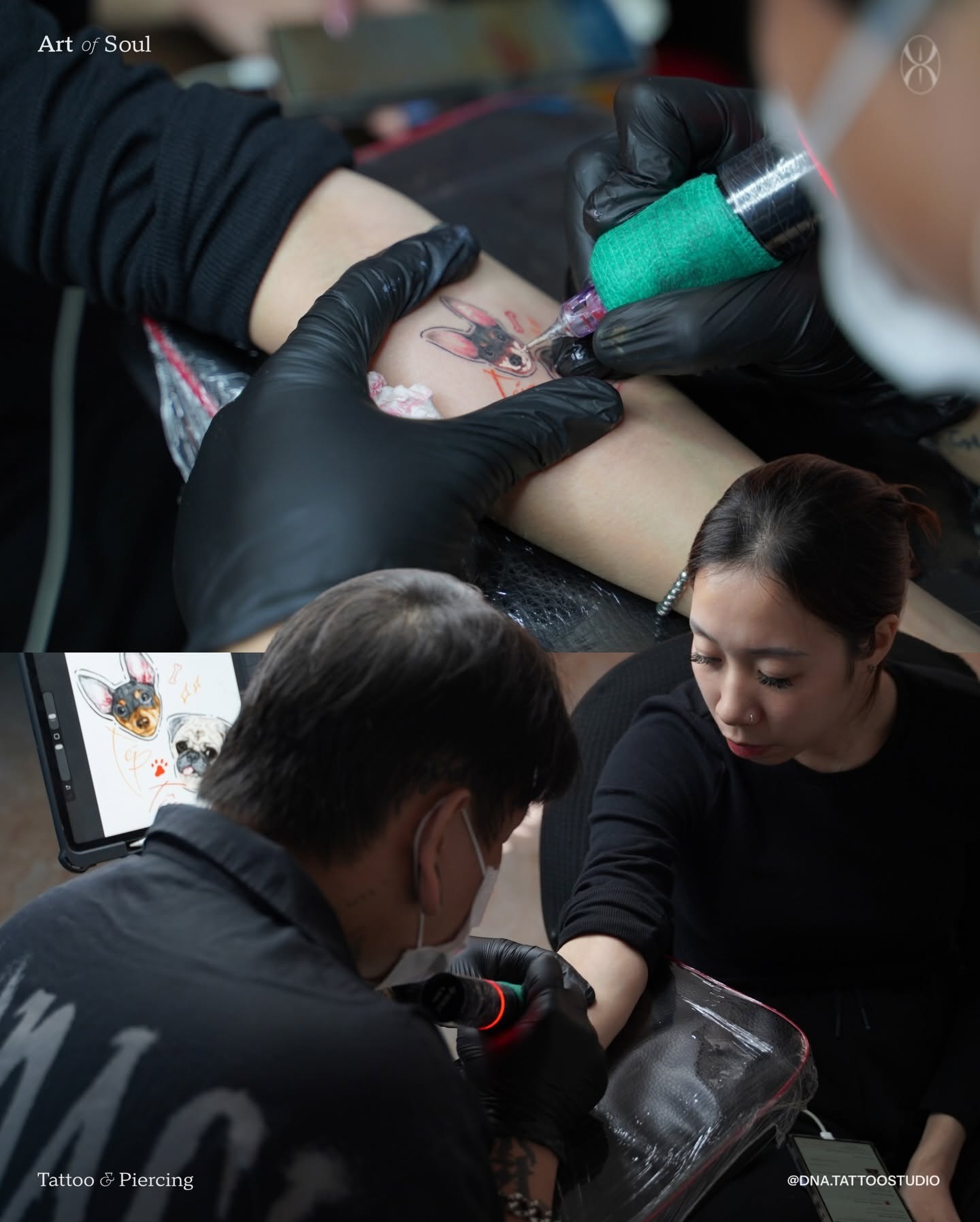
With over 10 years of experience, DNA’s artists work across realism, graphic, colour, traditional, Asian-inspired, fine-line and other tattoo styles. Every session follows professional hygiene procedures and uses single-use needles. English-friendly communication also helps international clients understand the tattooing process and what to expect during healing.
6.3 After: Personalised aftercare and follow-up beyond Hanoi
After the session, each client receives a free aftercare kit and guidance tailored to their tattoo, skin condition and healing response. Depending on the case, DNA Tattoo Studio may recommend protective wrapping, a three-day film or open healing with moisturiser rather than applying one fixed method to everyone.
A dedicated assistant stays in contact throughout recovery, reminding clients about aftercare and checking how the tattoo is healing. Questions from clients are treated as urgent, with 24/7 support available even after they leave Hanoi.
If the scabbing looks unfamiliar, send DNA Tattoo Studio a clear photo instead of picking it or changing your routine yourself. The team can review the situation based on experience and, when medical assessment is needed, consult or refer clients to qualified doctors rather than making an unsupported diagnosis.
If your tattoo is scabbing and you are not sure what you are looking at, send us a photo. We would rather answer a question early than fix a picked scab later.
7. Let your tattoo heal naturally, with support when needed
Scabbing is one stage of tattoo recovery, and most small, dry scabs will resolve with gentle care and time. Avoid interfering with the healing process, follow your artist’s instructions and seek professional help if symptoms begin to worsen.
For personalised aftercare guidance before and after leaving Hanoi, contact DNA Tattoo Studiovia +84 36 800 0690 (Hotline / WhatsApp / Zalo). Our team is ready to support you throughout the healing process.